Access
You need 100% access to the people who give you new files and ensure you keep in touch.

With increasing compliance costs, a fluid regulatory environment and an expanding digital ecosystem, you need to be more agile than ever. Single software platforms offering a one-size fits all approach often fall short, being too large or inflexible to provide the right customer experience.
In contrast, we’ve learned though working extensively with our clients in the Financial Services sector that the use of CRMs can solve many common problems.
To be fair, a CRM is not a silver bullet but used strategically it can lighten the burdens on your business.
A CRM is a system that makes sure you have a way to engage with your clients and new leads, which also provides a systematic process to convert those requests to commissions.
The goal should always be an engine that makes money and allows you to scale to whatever level you want.
There is a new opportunity here: Location is no longer a boundary.
Many of the financial specialists we have spoken to over the years have felt bound by the people in the office and its location. This meant for example, I’m in Melbourne so therefore that’s where I work and grow the business.
You are not limited to local business and clients or those within easy flight times. Far from it. You can set up partnerships with like-minded people across the country, acting as one using digital platforms. This gives you the strength you need so your book of business is larger, giving you more leverage.
After all, whoever owns the client wins. Yes, the vendors handle the transaction, but you need to own the client not the transaction.
You need 100% access to the people who give you new files and ensure you keep in touch.
You need systems that watch all prospect or client requests and ensure all those requests are completed in the time you set, so you don’t lose clients.
You don’t want to type much so let’s have a system the enriches the data so an email address and company name turns into a full company profile, background, size of company, staff, locations and even news so you know who you are dealing with.
Let’s make sure everyone in your team does their tasks so you are free to focus on the important stuff.
You need to have your website connected to your system so you can jump on new leads as they arrive.
You need systems that watch for events like new leads and enquiries, guaranteeing they all get a quick response.
You need a method to streamline processing of new files to get what you need quickly and in a systematic way, so you can rapidly decide if the file can be actioned or not.
Let’s make it easy and ensure the system is connected to Microsoft Outlook or Google so emails can get turned into files for easy management.
You need to profile leads and contacts so you can keep in touch through a marketing campaign or newsletter in addition to the personal calls you make. You need to keep top of mind.
You need simple lists of people to call and follow up – wherever you are.
Let’s make sure you can see it all on your mobile phone or tablet so you are always in touch.
The Financial sector is one driven by compliance needs, from ensuring your clients are informed and updated, that the correct documents have been presented and signed, that your staff are maintaining their qualifications to being able to deliver fully auditable contact history and more.
Designed around the concepts of full client management, CRMs allow you to capture all the touch points with your clients and automate routine activities that take time and money to complete.
As the sector grows, so too does the complexity of operating a profitable business. Since no single tool can realistically offer the range of functions you need, more and more businesses find themselves breaking their activities down to application-sized solutions. Do you need marketing? Use an EDM tool. Surveys? Digital signing? Prospectus or account management? The list grows.
Our clients benefit from the CRM’s ability to integrate with many other operational systems or even standalone databases. While the CRM doesn’t replace the functions of these tools it acts as a kind of Swiss Army Knife, leveraging the data into a single, easy to use platform.
By measuring client interactions over time the CRM builds a model of how and when clients are most likely to engage.
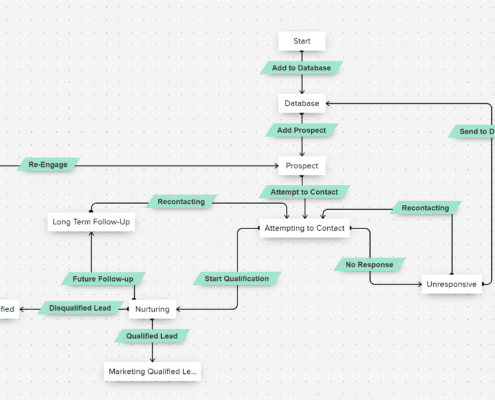
With full contact tracking against customer journey maps, your business can articulate a clear and easy to follow path of critical next steps to increase the value of your relationships.
CRMs often have embedded or tightly integrated marketing and communications features, accessible from a common interface. These may include Electronic Direct Mail, social campaigns, integrated webinars or training tools. Since they share a common data set, the results of campaigns and even specific Q&A sessions from webinars may be recorded against the individuals who attended, providing your team with a history of your engagement and insights on how to improve.
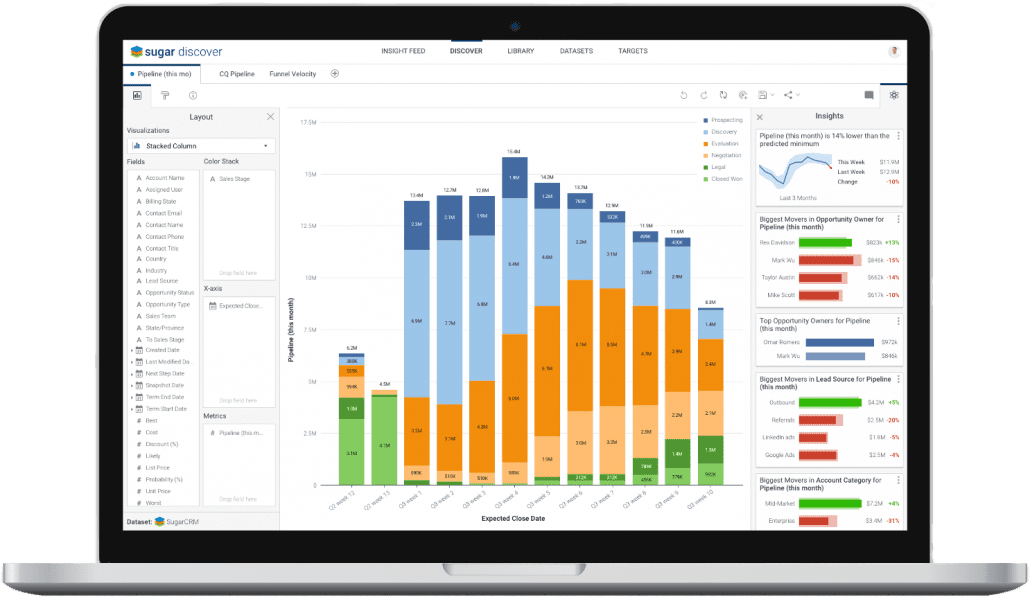
Sometimes an out of the box solution isn’t able to offer the full range of functions you need. The good news here is that some CRMs, such as Sugar CRM are fully extensible and designed for deep customisation.
In the case of Sugar CRM, which is an open source platform we have added deeply customised features to satisfy our clients’ unique requirements. Leveraging the core capabilities of a system designed to be client-focused allows our clients to use the CRM as a scaffold onto which they can build what they want without having to start from scratch.
For more about CRM Strategy and how we can help, click here, call us on 1300 276 669 or send us an email.